
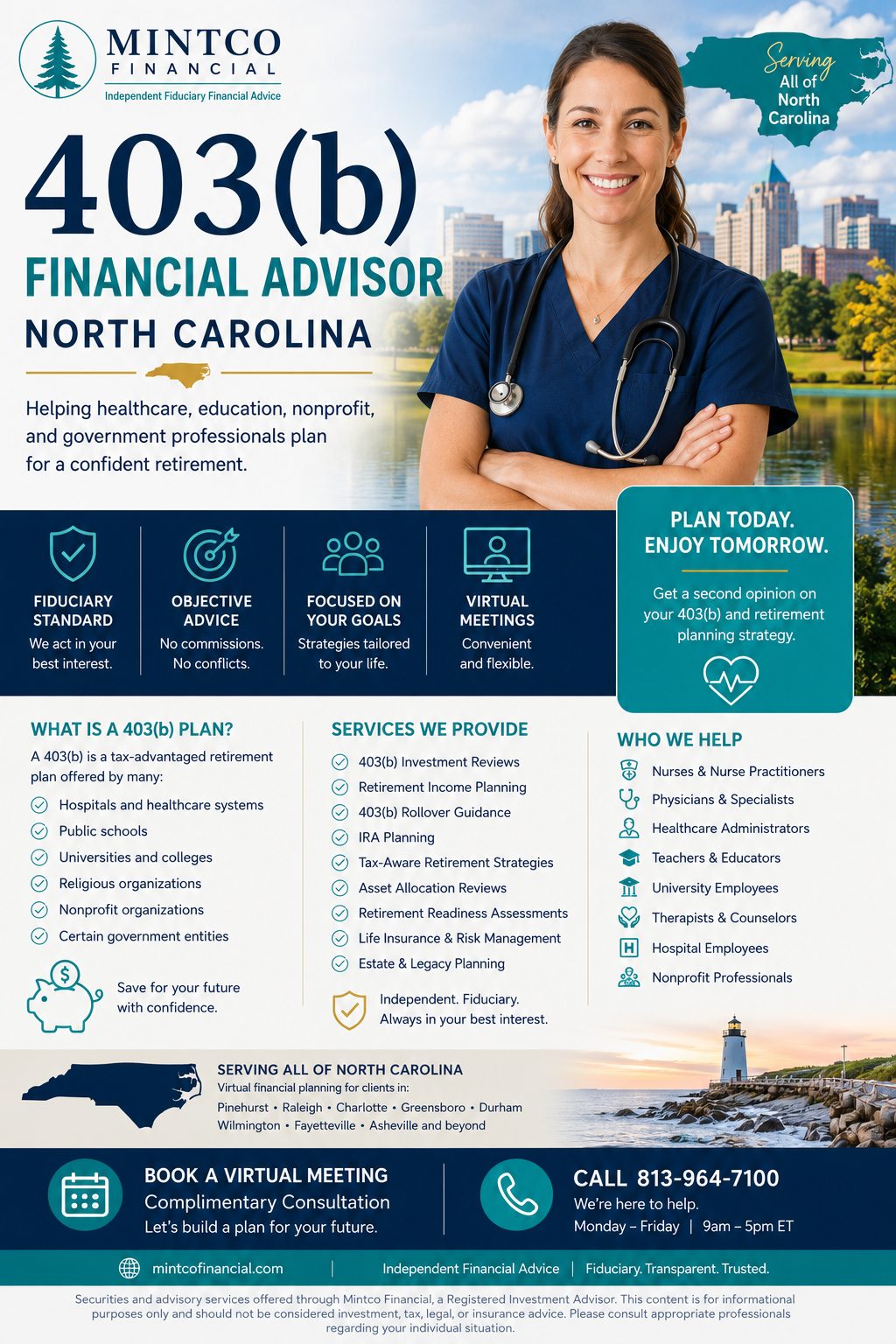
What Is a Roth 403(b)? A North Carolina Retirement Planning Guide
Many healthcare professionals, teachers, university employees, and nonprofit workers in North Carolina have access to a Roth 403(b) through their employer. Understanding how a Roth 403(b) works can help you make informed decisions about retirement savings, taxes, and long-term financial planning.
While traditional 403(b) contributions may reduce your taxable income today, Roth 403(b) contributions offer the potential for tax-free withdrawals in retirement if certain requirements are met.
What Is a Roth 403(b)?
A Roth 403(b) is a retirement savings account available through certain employers, including:
- Hospitals and healthcare systems
- Public schools
- Universities and colleges
- Religious organizations
- Nonprofit organizations
Unlike a traditional 403(b), Roth 403(b) contributions are made with after-tax dollars. This means you do not receive a tax deduction today, but qualified withdrawals may be tax-free in retirement.
How Does a Roth 403(b) Work?
When you contribute to a Roth 403(b):
- You pay income taxes on contributions today.
- Your investments grow tax-deferred.
- Qualified withdrawals may be tax-free.
- You can potentially build a source of tax-free retirement income.
Traditional 403(b) vs Roth 403(b)
| Feature | Traditional 403(b) | Roth 403(b) |
|---|---|---|
| Tax Deduction Today | Yes | No |
| Tax-Free Growth | No | Potentially Yes |
| Tax-Free Retirement Withdrawals | No | Potentially Yes |
| Current Tax Savings | Yes | No |
| Future Tax Flexibility | Limited | Potentially Greater |
Who Might Consider a Roth 403(b)?
A Roth 403(b) may be worth evaluating if:
- You are early in your career.
- You expect higher future income.
- You believe tax rates may increase over time.
- You want tax diversification in retirement.
- You value the possibility of tax-free retirement income.
Who Might Prefer a Traditional 403(b)?
Some individuals may prefer traditional pre-tax contributions if:
- They are currently in a higher tax bracket.
- They want to reduce taxable income today.
- They expect lower taxable income in retirement.
- They need current-year tax deductions.
Can You Contribute to Both?
Many employer plans allow employees to split contributions between traditional and Roth 403(b) accounts. This approach may provide tax diversification and greater flexibility in retirement.
Can a Roth 403(b) Be Rolled Into a Roth IRA?
In many situations, a Roth 403(b) can be rolled into a Roth IRA when changing jobs or retiring. A properly executed rollover may help maintain tax advantages while expanding investment choices.
Common Questions About Roth 403(b) Plans
Do healthcare professionals use Roth 403(b)s?
Yes. Many hospital employees, nurses, physicians, therapists, and healthcare administrators contribute to Roth 403(b) accounts when offered by their employer.
Do teachers have access to Roth 403(b)s?
Many public school employees and university staff members have access to Roth 403(b) options through their retirement plans.
Is a Roth 403(b) better than a traditional 403(b)?
Neither option is universally better. The most appropriate choice depends on your tax situation, retirement goals, and overall financial plan.
Get a Second Opinion on Your Retirement Plan
Understanding how a Roth 403(b) fits into your overall retirement strategy can be complex. Reviewing your options may help you make more informed decisions regarding taxes, retirement income, and long-term financial goals.
Book a Complimentary Retirement Plan Review
Questions about a Roth 403(b), traditional 403(b), or retirement planning? Schedule a virtual consultation today.
Serving clients throughout North Carolina through secure virtual meetings.
Important Disclosure:
This content is for informational and educational purposes only and should not be considered individualized investment, tax, legal, or financial advice. Tax laws and retirement plan provisions may change. Consult your tax advisor, CPA, attorney, or financial advisor regarding your specific circumstances. Advisory services are offered through Mintco Financial, a Registered Investment Advisor, where properly registered or exempt from registration.
“`